
NEWS
🚨 TRUMP CAPTURES MADURO AFTER BOMBING VENEZUELA – SENATOR: “IT’S WILDLY ILLEGAL.” Americans woke up today to an extraordinary claim from the President of the United States: Donald Trump says U.S. forces bombed Venezuela overnight and captured Venezuelan President Nicolás Maduro, removing him from the country. This was not leaked reporting. It was not anonymous sourcing. It was Trump himself announcing it. And If true it represents one of the most extreme and reckless uses of U.S. military power in modern history. There has been no declaration of war. There has been no authorization from Congress. There has been no public explanation of an imminent threat to the United States. Yet Trump claims to have carried out a direct military strike against a sovereign nation and seized its head of state. That is not how the Constitution works. More than a month ago, on November 16, 2025, U.S. Senator Chris Murphy warned exactly where this road leads. When asked about possible U.S. military action against Venezuela, Murphy said it would be “wildly illegal,” calling it a transparent effort to distract the public from rising prices and mounting scandals at home. That warning now looks chillingly prescient. This is not about defending democracy. This is not about protecting Americans. This is not about international law. This is about a president who believes he can use military force to change the subject whenever accountability closes in. History is very clear about moments like this. When leaders face political pressure at home and manufacture foreign crises abroad, the result is instability, escalation, and innocent people paying the price for political desperation. If Trump believes he has the authority to bomb another country and capture its president, he must present that authority publicly and legally. He must answer to Congress. He must answer to the Constitution. And he must answer to the American people. If he cannot do that, then this is not strength. It is lawlessness. And it is exactly what Americans were warned about.👉 Read the full breakdown, the legal implications, and what happens next — before this story disappears from your feed. Click now.

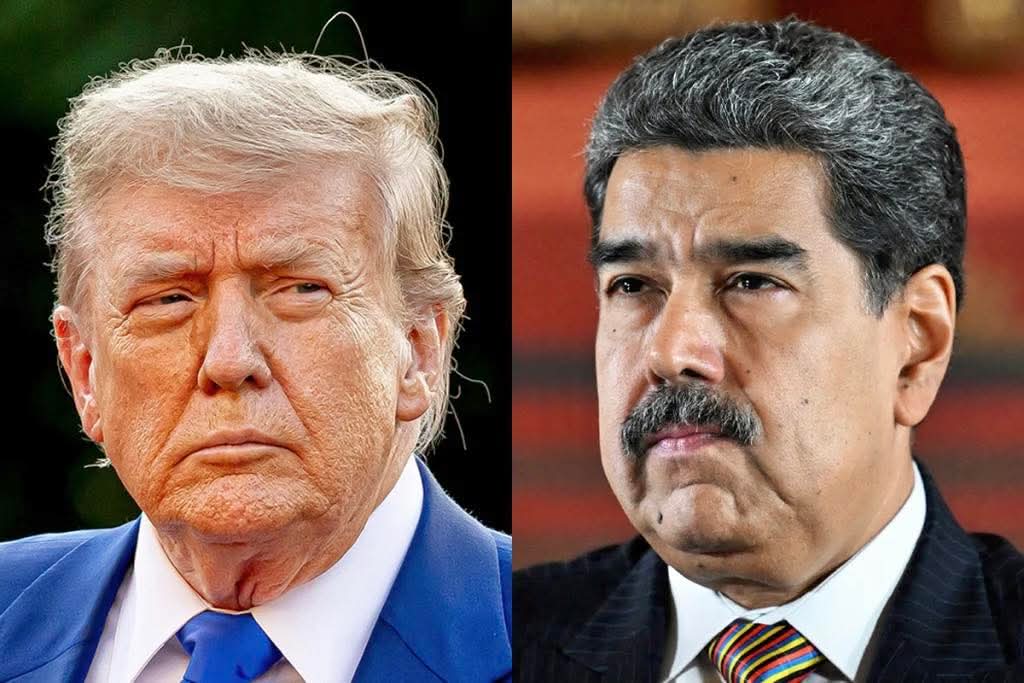
🚨 A CLAIM THAT SHOOK THE WORLD BEFORE BREAKFAST
Americans woke up to a statement so explosive it instantly set social media, legal circles, and foreign policy experts on fire.
According to Donald Trump, U.S. forces bombed Venezuela overnight and captured its sitting president, Nicolás Maduro, forcibly removing him from the country.
No leak.
No anonymous source.
No intelligence briefing.
Trump himself said it.
If this claim is true, it would represent one of the most dramatic—and legally controversial—uses of American military power in modern history. Not in secret. Not in a covert operation later revealed by journalists. But announced outright by the President of the United States.
And that’s what has stunned observers the most.
NO WAR. NO VOTE. NO EXPLANATION.
There has been no declaration of war against Venezuela.
There has been no authorization from Congress.
There has been no public evidence presented of an imminent threat to the United States.
Yet Trump is claiming he ordered a direct military strike on a sovereign nation and oversaw the seizure of its head of state.
Under the U.S. Constitution, Congress—not the president—holds the power to declare war. Even limited military actions typically require legal justification, congressional notification, or claims of immediate national defense.
So legal experts are now asking a question that cuts straight to the core of American democracy:
By what authority?
A WARNING THAT NOW LOOKS PROPHETIC
What makes this moment even more unsettling is that it didn’t come out of nowhere.
On November 16, 2025, more than a month before Trump’s announcement, Senator Chris Murphy publicly warned about the possibility of U.S. military action against Venezuela. His words were blunt and unmistakable.
He called such a move “wildly illegal.”
Murphy warned that launching military action without congressional approval would likely be used as a political distraction—an attempt to redirect public attention away from rising prices, domestic unrest, and growing scandals at home.
At the time, critics dismissed the warning as alarmist.
Today, it reads like a preview.
DISTRACTION OR DOCTRINE?
Supporters of the president argue that Venezuela has long been a destabilizing force in the region and that Maduro’s government has violated human rights for years.
But critics say that’s not the issue.
The issue is process.
This isn’t about whether Maduro is popular or unpopular.
This isn’t about whether Venezuela’s government is democratic or authoritarian.
This is about whether any U.S. president can unilaterally bomb another country and seize its leader without public justification, legal authority, or congressional oversight.
If that power exists, it changes everything.
HISTORY’S WARNING SIGNS
History offers a sobering lesson: when leaders face intense pressure at home, foreign crises can become political tools.
From manufactured
to sudden military actions, the pattern is well-documented—and the consequences are almost always severe. Escalation follows. Civilian suffering increases. Global instability grows.
And once that line is crossed, it’s hard to walk back.
Foreign governments are now watching closely. Allies are reportedly seeking clarification. Legal scholars are debating whether this claim—if verified—could constitute a constitutional crisis.
QUESTIONS THAT DEMAND ANSWERS
If Trump’s statement is accurate, Americans deserve answers:
What legal authority was used?
Was Congress informed or consulted?
What evidence justified immediate military action?
Where is Nicolás Maduro now—and under what jurisdiction?
Silence is not an answer.
THIS IS BIGGER THAN POLITICS
This moment isn’t about party loyalty.
It isn’t about ideology.
It isn’t even about Trump alone.
It’s about whether the United States still operates under the rule of law—or under the will of one individual.
If a president can launch bombs and capture foreign leaders by announcement alone, then constitutional limits no longer mean what Americans have been taught they mean.
That’s why this moment matters.
FINAL WORD
If Trump believes he acted lawfully, he must show the law.
If he believes Congress was not required, he must explain why.
If he believes Americans should accept this without scrutiny, he is mistaken.
Strength without accountability is not strength.

🚨 BREAKING: Donald Trump is reportedly furious after a high-profile critic—long seen as one of his most vocal rivals—publicly poked fun at Melania Trump’s latest film project. What sounded like a simple sarcastic joke has exploded online—clips are everywhere, supporters are fighting back, and critics are amplifying every second. The movie is no longer the headline. The reaction is. 👉 Click the link to see the moment that set social media on fire 👇👇

A federal judge has ruled: Melania Trump must testify under oath—and the panic inside Trump’s camp is real. What she reveals could change everything. 👉 Click the link to get the full story.
🚨 BREAKING: U.S. Senator Just Made a Historic Call to Remove Trump Under the 25th Amendment — And D.C. Is Exploding Over It 🚨 For the first time in years, a sitting U.S. Senator has publicly said President Trump should be declared unable to govern under the Constitution’s 25th Amendment — triggering a rare and intense national debate about presidential fitness, foreign policy decisions, and America’s future. � LiveNOW +1 💥 Is this constitutional crisis real — or just politics as usual? 👉 Click to read the full story and decide for yourself. #Trump #25thAmendment #BreakingNews #USPolitics #ConstitutionalCrisis

🔥 THE REAL STORY the Media Isn’t Telling You About Alex Pretti — And Why You Have to See the Footage Before You Believe Anything Else 🔥 Shocking video evidence and official investigations now contradict early federal claims — showing Alex Pretti, a 37-year-old ICU nurse and lawful gun owner, was recording Border Patrol officers with his phone and was not armed at the moment he was tackled and shot dead by federal agents. Independent videos show him being pinned, disarmed, and then fatally shot — sparking a federal civil-rights probe into the shooting. � en.wikipedia.org +1 👉 Click to watch the footage and decide for yourself what really happened.
