
NEWS
🚨 “NO TRUMP, NO JANUARY 6.” Jack Smith just dropped a bombshell in newly released deposition testimony, saying the Capitol attack would not have happened without Donald Trump. Smith called Trump the most culpable and responsible figure, accusing him of knowingly spreading false election claims, directing allies, and then refusing to act as violence unfolded — all for his own benefit. ⚖️🔥 The implications are massive — and the story is still unfolding… 👇👇

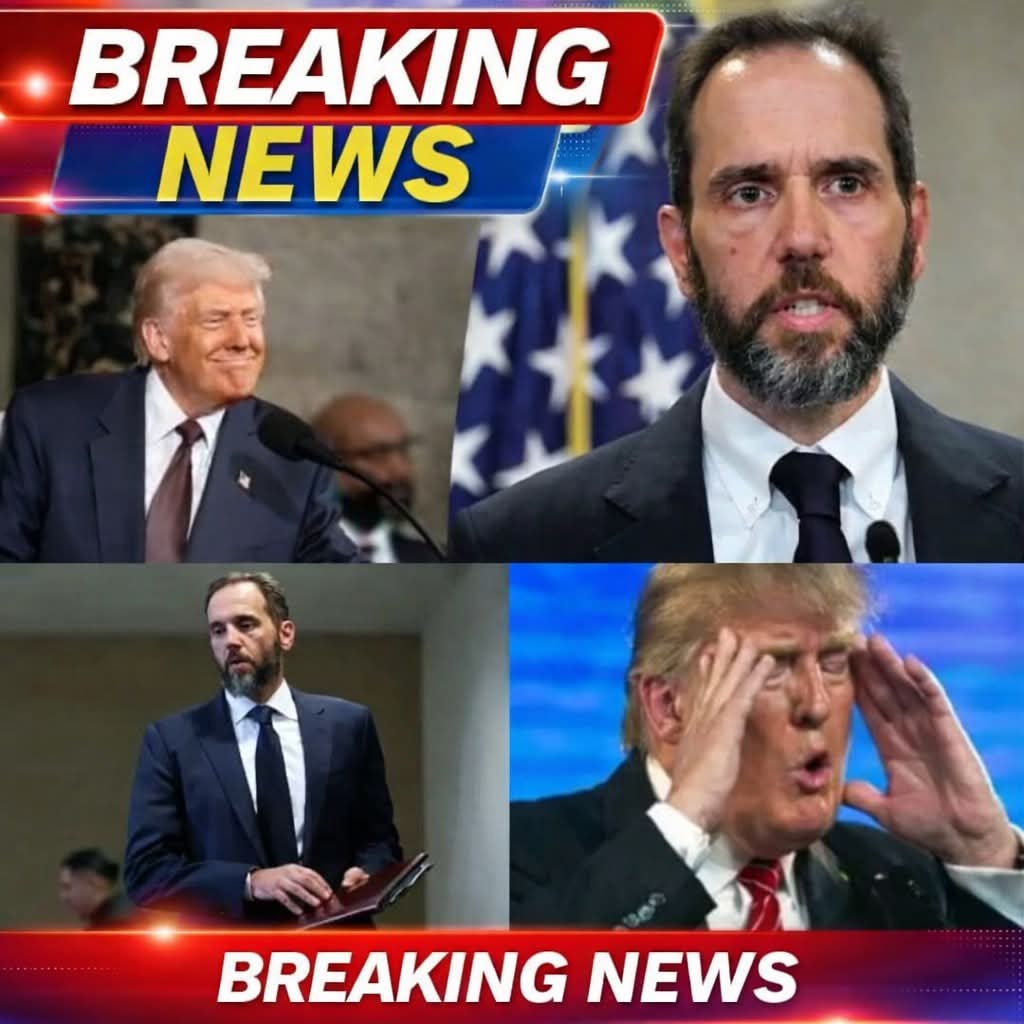
🚨 “NO TRUMP, NO JANUARY 6.”
Jack Smith’s Newly Released Deposition Blows the Doors Off the Capitol Attack — and Puts Donald Trump at the Center of It All
In a moment that may redefine how history remembers January 6, newly released deposition testimony from Special Counsel Jack Smith delivers one of the most direct, unambiguous statements ever made by a top federal prosecutor about Donald Trump’s role in the Capitol attack.
Smith did not hedge.
He did not soften his language.
And he did not spread blame thinly across “chaos,” “crowds,” or “misunderstandings.”
Instead, Smith made it crystal clear:
“No Trump, no January 6.”
That single sentence — now reverberating through legal circles, political media, and Washington power centers — carries enormous weight. According to Smith, the violent assault on the U.S. Capitol would not have happened without Donald Trump. Not in that form. Not at that scale. Not at all.
What follows from that assertion is far more explosive.
The Core Claim: Trump as the Central Driver
In his deposition, Jack Smith identified Donald Trump as “the most culpable and responsible figure” behind the events of January 6. Not merely a background influence. Not a reckless bystander. But the engine that drove the chain of events.
Smith outlined a three-part framework of responsibility:
Knowingly spreading false claims about the 2020 election
Directing and mobilizing allies to pressure institutions and inflame supporters
Refusing to act as violence unfolded — despite having the power and opportunity to stop it
According to Smith, none of these were accidents. None were misunderstandings. And none were isolated.
They were, in his words, “deliberate choices made for personal benefit.”
The Lie That Lit the Fuse
At the center of Smith’s testimony is a point prosecutors have been building toward for years: Donald Trump knew he lost the 2020 election.
Smith emphasized that Trump was repeatedly told — by his own campaign officials, senior White House staff, the Department of Justice, state election authorities, and even his own attorneys — that claims of widespread voter fraud were false.
Yet Trump continued to push them.
Not once.
Not twice.
But relentlessly.
Smith described this as the foundational act that made January 6 possible.
False claims created rage.
Rage created urgency.
Urgency created violence.
According to the deposition, Trump didn’t just repeat these lies in public speeches. He amplified them through social media, private calls, pressure campaigns, and coordinated messaging with allies who echoed the same narrative across conservative media.
The result was a massive portion of the electorate convinced — wrongly — that democracy had been stolen, and that drastic action was justified.
“Directed, Not Inspired”
One of the most striking aspects of Smith’s testimony is his rejection of the idea that Trump merely “inspired” the crowd.
Smith argued Trump directed events.
The deposition details how Trump:
Pressured state officials to overturn certified results
Pushed the Justice Department to announce investigations he knew lacked evidence
Encouraged the creation of alternate slates of electors
Repeatedly summoned supporters to Washington, promising the day would be “wild”
Smith framed January 6 not as a spontaneous riot, but as the culmination of a pressure campaign that failed everywhere else — courts, states, agencies — leaving Congress as the final obstacle.
When that obstacle remained standing, the crowd became the tool.
The Moment Everything Turned Violent
As the Capitol was breached, lawmakers fled, police were overwhelmed, and the certification of the election was halted, Trump was not unaware — according to Smith.
He was watching.
The deposition states Trump was informed in real time that:
The Capitol had been breached
Police were under attack
Members of Congress were in danger
And yet, for hours, Trump did nothing.
No immediate call for calm.
No urgent instruction to disperse.
No deployment of authority proportional to the crisis.
Smith described this in chilling terms: “A refusal to act while violence served his interests.”
Only when it became clear that the effort had failed — when the National Guard was mobilized and the certification was set to resume — did Trump issue statements urging peace.
By then, the damage was done.
“For His Own Benefit”
Perhaps the most legally significant portion of the deposition is Smith’s assertion of motive.
This wasn’t negligence, he argued.
It wasn’t incompetence.
It wasn’t confusion.
It was self-interest.
Smith stated Trump’s actions — before, during, and after January 6 — were aimed at retaining power and avoiding the consequences of electoral defeat.
That framing matters enormously, because it cuts directly into criminal intent.
In legal terms, Smith is not describing political speech.
He is describing knowing deception, abuse of authority, and reckless disregard for human life in pursuit of personal gain.
The Legal Earthquake
The implications of this deposition are massive.
First, it strengthens the argument that Trump’s conduct was not protected by the First Amendment, because knowingly false statements used to incite or enable violence fall outside constitutional protection.
Second, it bolsters conspiracy and obstruction theories by tying Trump’s lies directly to an attempt to block the lawful transfer of power.
Third, it undermines defenses built around “advice of counsel” or “sincere belief,” because Smith explicitly states Trump knew the claims were false.
In short, this testimony doesn’t just narrate January 6 — it connects the dots.
Political Shockwaves
Beyond the courtroom, the deposition lands like a political grenade.
For Trump supporters, it challenges the last remaining shield: the idea that January 6 “got out of hand” without Trump’s involvement.
For Republican lawmakers, it raises uncomfortable questions about continued loyalty to a man now described under oath as the central cause of an attack on Congress.
For voters, it reframes the entire event — not as a dark day caused by anonymous extremists, but as the predictable outcome of a sitting president’s choices.
Why This Moment Matters
January 6 has often been discussed in fragments:
The riot.
The speeches.
The tweets.
The delays.
What Jack Smith’s deposition does is pull those fragments into a single narrative — one where cause and effect are no longer ambiguous.
No Trump, no January 6.
That statement is not rhetorical.
It is prosecutorial.
It is historical.
And it may prove decisive.
The Story Is Still Unfolding
This deposition is not the end. It is a turning point.
More filings are coming.
More testimony may be released.
More legal battles lie ahead.
But one thing is now unmistakably clear:
The question is no longer whether Donald Trump was connected to January 6.
The question is whether the country is prepared to confront what it means if the attack on American democracy began at the top.
A national pro-life organization has endorsed Rep. Ralph Norman in South Carolina’s closely watched Senate primary to replace the late Sen. Lindsey Graham. MORE:
Trump Touts Crime Record in N.Y. as GOP Midterm Races Heat UpTrump Touts Crime Record in N.Y. as GOP Midterm Races Heat Up
OMG!! Taylor Swift and Travis Kelce Finally Confirm That… See Full Details
Inside the 10-Minute Clip That Has Everyone Crying: The Kelce Girls’ Heartfelt Wedding Performance, Wyatt, Elliotte, and Bennett Serve as Flower Girls and Perform a Special Song They Composed for Taylor Swift and Travis Kelce at their Star-Studded Wedding, Our Girls Stole the Show!’ Jason Kelce’s Wife Kylie Kelce Shares Precious Wedding Pictures as Her Daughters See the Never-Before-Seen 10-Minute Clip and 20 Newly Released Wedding Photos..,⤵️⤵️
JUST IN…:A somber and emotional moment unfolded today as the President of the United States, visibly shaken, fought back tears while addressing the nation about devastating news concerning his wife, Melania Trump. The heartbreaking announcement came during a last-minute press conference at the White House, leaving reporters and the gathered crowd in stunned silence…SEE the Emotional Heartbreaking Announcement
First Look at the Moment Travis Kelce Spots Taylor Swift Arriving With Her Mom Andrea and His Mom Donna Kelce and CHARGES OVER to Rush and Kiss Her moments afer she was rushed to the ………….. see details below
Kylie Kelce Finally Addresses and confirmed Baby No. 5…. Her Response Says It All
